Research
Speech is both highly structured and enormously variable: no two pronunciations are ever quite the same. That variation isn’t arbitrary. Why do some sounds weaken or blend together in normal speech, and how do listeners still reliably understand what is said? Does the way you tend to say things influence how you hear them when others speak?
My work investigates what drives phonetic variation, how listeners make sense of it, and what it reveals about how sound systems function. To do this, I look at speech from multiple angles, including experiments that track how sounds are produced and perceived in fine detail, large-scale collections of real-world speech data that reveal complex patterns, and computational models that connect individual behaviour with population-level variation and change.
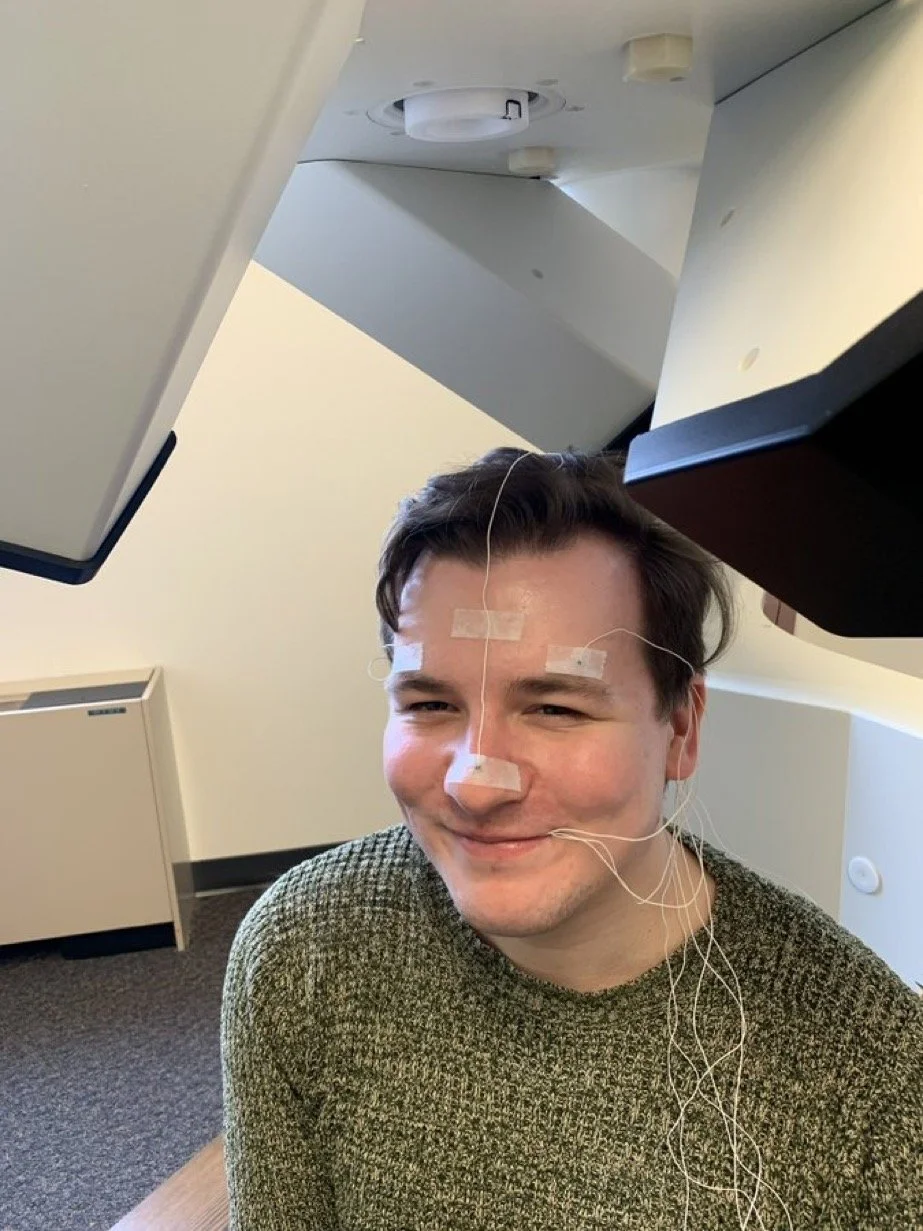
Electromagnetic Articulography (EMA) tracks the position of tiny sensor coils over time.
Experimental Phonetics
My experimental work investigates how the physical realization of speech connects to the structure of sound systems. Grounded in laboratory phonology, I treat fine-grained phonetic detail as theoretically informative, focusing on how articulatory movements unfold in real time, how prosody shapes their implementation, and how speech production and perception interact in individuals. I use a wide range of techniques to measure the acoustic and kinematic properties of speech production (e.g., Praat, EMA, and ultrasound), and how listeners respond to them (e.g., eye-tracking).
Selected projects:
• Categoricity and gradience in Coronal Stop Deletion
• Kinematic properties of prosodic boundaries in conversational turn-taking
• Individual production and perception in phonetic imitation
Corpus Phonetics
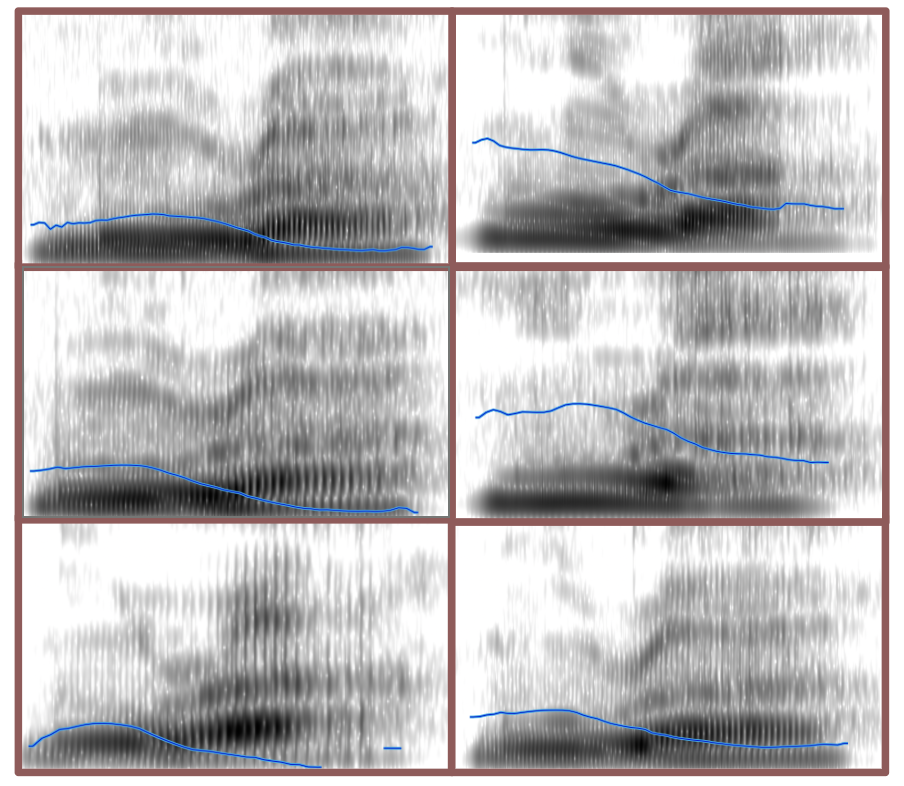
My corpus-based work examines large collections of real-world speech data to identify structured population-level variation. I’m interested in how linguistic and social factors combine to shape the way sounds are produced, and in what these patterns reveal about the underlying grammar of a variety. These findings often guide my experimental work, helping to identify questions about the mechanisms that generate patterns in natural speech.
Selected projects:
• Lexical frequency and morphological structure interact to predict variation in Philadelphia
• Pitch settings at the intersection of race and gender in Memphis
Computational Modeling
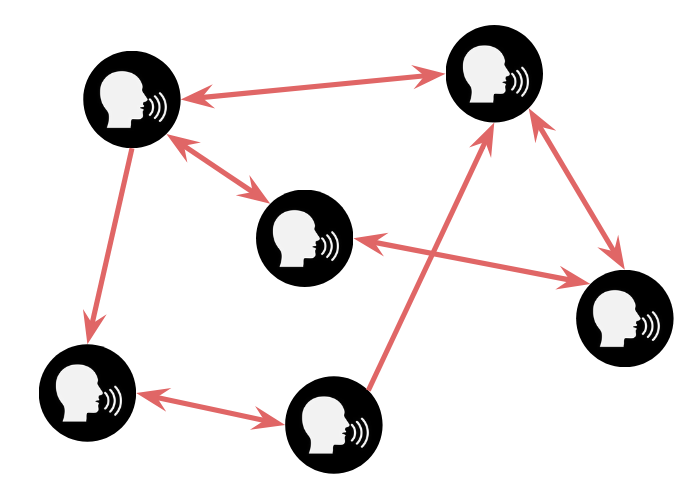
My computational work examines how production and perception mechanisms can shape larger sound systems over time. In particular, I build models to demonstrate how listener responses to coarticulation or covert articulation may contribute to trajectories of sound change or long-term stability. Simulations let us test effects at scales and time-depths that are impractical with naturalistic data, linking experimental results back to population-level outcomes.
Selected projects:
• The role of perceptual bias in the development of distinctive vowel nasalization (under review)
Phonological Theory

Presenting a Stochastic OT analysis of Variable Word-Final Schwa in Parisian French at PLC42.
Phonology provides the framework for understanding how patterns of sound are structured and represented. I focus on the architecture of the grammar, and how phonological and phonetic knowledge are structured around variation. While much of my work is empirically grounded in phonetic data, I also engage with formal frameworks that generate probabilistic patterns within the phonological grammar.
Selected projects:
• Stochastic Optimality Theory account of variable word-final schwa in Parisian French